The School Run as a Metabolic Opportunity: How Cycling or Walking the Route Changes Your Whole Day
Replacing even two car school runs per week with an active commute produces a measurable shift in daily energy expenditure that compounds across a school year. This piece examines the physiology and the practical logistics of making the switch work for real families.

Exercise Physiologist & Active Lifestyle Coach · 17. 7. 2026 · 5 min čtení
Most parents think of the school run as a logistical chore — something to survive before the real day begins. But those twenty minutes between your front door and the school gate are, physiologically speaking, some of the most valuable of your entire day. Swapping the car for a bicycle or your own two feet, even just twice a week, quietly restructures your body’s energy balance in ways that accumulate steadily across an entire school year.
Why the School Run Is Metabolically Different From a Gym Session
Structured exercise — a spin class, a run in the park — is easy to count and easy to skip. Active commuting is different because it is attached to something that simply has to happen regardless of your mood, the weather, or how tired you feel. This quality of being non-negotiable is what makes it so powerful from a habit and metabolism standpoint.
When you walk or cycle at a moderate pace, your body draws on its aerobic energy system, burning a mix of carbohydrates and fat. Unlike sitting in a car, this also activates large muscle groups in your legs and core, elevates your heart rate into a light-to-moderate zone, and raises your overall non-exercise activity thermogenesis (NEAT) — the energy your body expends outside of formal workouts. NEAT is one of the most variable components of daily energy expenditure and is strongly linked to body weight management over time.
What “Two Runs Per Week” Actually Adds Up To
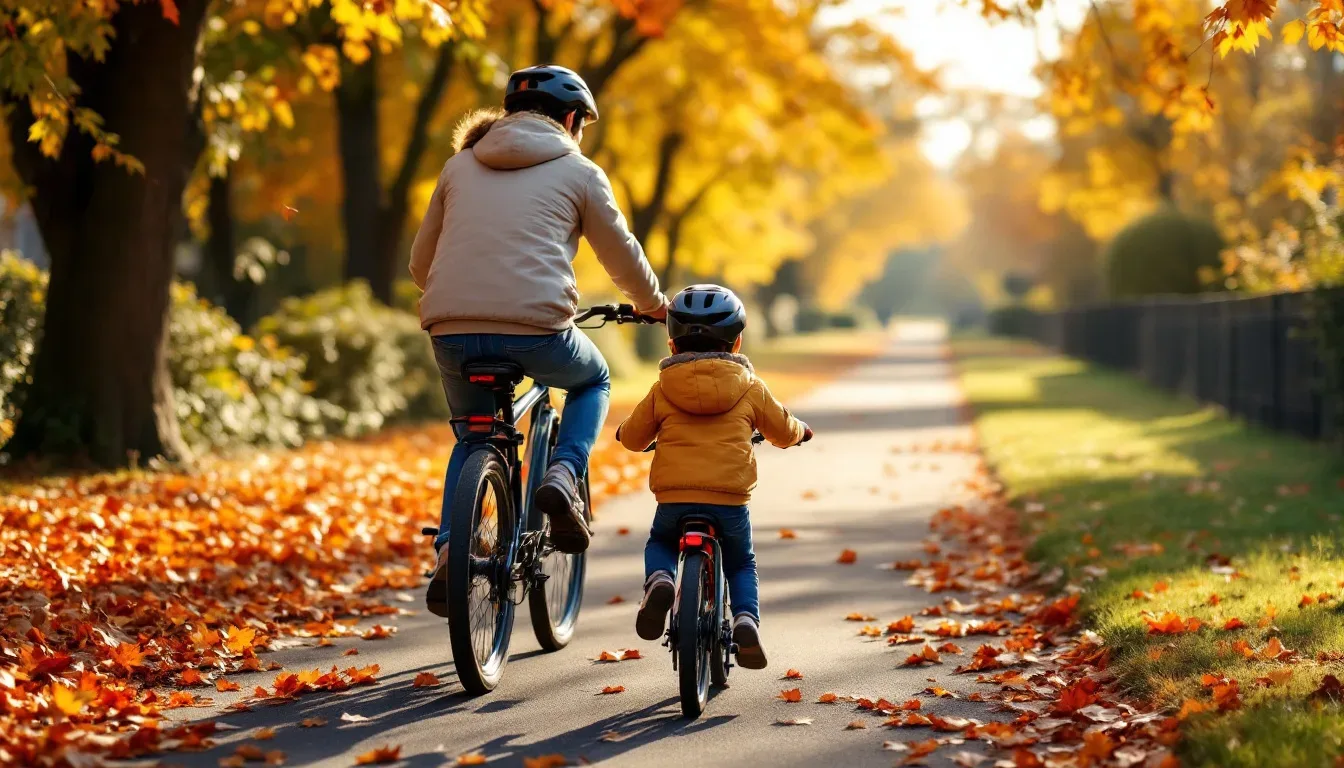
Consider a realistic scenario: a parent and child cycling a 2 km school route each way, twice a week. That is 8 km of active travel per week. A school year in most European countries runs roughly 38 weeks. Over that year, this family covers more than 300 km on a journey they would otherwise have made by car. For a parent cycling at a comfortable pace, even a short ride creates a meaningful caloric demand compared to sitting stationary. Multiply that across months and the cumulative effect on energy balance, cardiovascular conditioning, and even mood regulation becomes genuinely significant — not as a dramatic transformation, but as a quiet, consistent shift in baseline fitness.
Children benefit equally. Active travel to school is associated with higher daily movement totals and better concentration in the first part of the school day — something many teachers notice without necessarily knowing the reason.
The most sustainable movement in your week is the movement you were going to do anyway — you just did it differently.
The Physiology of a Better Morning
The timing of the school run — early morning, typically before 9 am — happens to coincide with a window when light physical activity produces particularly good results for mental clarity and energy regulation through the rest of the day.
Light exercise and morning cortisol
Cortisol naturally peaks shortly after waking. Gentle aerobic movement during this window helps the body use that cortisol productively, supporting alertness and focus rather than allowing it to linger as background tension. For parents who then go on to desk work, this translates into a noticeably calmer, clearer first hour at work.
Blood sugar and the post-commute meal
A light walk or cycle before breakfast (or immediately after a light one) improves how your muscles respond to glucose. This means a more stable blood sugar curve after your morning meal — fewer mid-morning energy dips, and less likelihood of reaching for a sugary snack by 10 am.
Making the Logistics Actually Work
The number one reason families abandon active school runs is not motivation — it is friction. Wet kit, a heavy school bag, an awkward route, or running late once too often. Solving for friction is more important than solving for fitness.
- Route scout in advance. Walk or cycle the route on a weekend when there is no time pressure. Identify pavement gaps, crossings, and where you can store a bike at school.
- Keep a dry bag by the door. A lightweight waterproof layer for you and your child removes the single biggest weather-related excuse. You do not need specialist cycling gear — just something that keeps you dry for 15 minutes.
- Start with one day per week. Committing to Monday only for a month builds the habit and irons out the logistics before you scale up.
- Redistribute the school bag load. If your child’s bag is heavy, a simple rear pannier or a small handlebar bag on a bike spreads the weight. For walking, teach children to pack only what they need that day.
- Build in five extra minutes. Active commutes take slightly longer, especially early on. Leaving five minutes earlier removes the stress that otherwise makes you reach for the car keys.
- Involve the child in the decision. Children who feel ownership over the choice are far more likely to cooperate on cold, grey Tuesday mornings.
What Happens to Your Day After You Arrive
The effects of a 15–20 minute moderate walk or cycle do not evaporate once you sit down at your desk or kitchen table. Your metabolism remains slightly elevated for a period afterwards. More usefully, many people report a qualitative shift in how they approach the first part of their working day — less sluggishness, a cleaner mental start. This is not a health claim; it is a commonly reported experience, and the underlying mechanisms — increased blood flow to the brain, release of mood-regulating neurotransmitters, the simple satisfaction of having done something physical before 9 am — are well understood.
For children, arriving at school having moved their bodies rather than sat in a car appears to support readiness to learn. Physical activity before cognitive tasks is something many schools now actively build into their morning routines for exactly this reason.
Building Toward More Without Burning Out
Two active school runs a week is a realistic and sustainable entry point, not an endpoint. Once the route is familiar, the kit is sorted, and the habit is embedded, many families naturally extend to three or four days. Some eventually find it easier to walk or cycle than to deal with parking and traffic. The goal is never to be impressive — it is to make the active option the path of least resistance.
If cycling feels like a step too far initially, walking the whole route or even parking the car two streets away and walking the final stretch are legitimate starting points. Any reduction in the proportion of the journey spent sitting in a vehicle counts, and every metre adds to your annual total.
Časté dotazy
What if the school is too far to walk or cycle the whole way?
A partial active commute still counts. Driving or taking public transport to a point closer to school and covering the last 10–15 minutes on foot or by bike gives you much of the metabolic and mood benefit of a full active run. Many families find a convenient parking spot or a bus stop that works as a reliable “transfer point” and stick with it all year.
Is cycling with young children safe in urban traffic?
Safety depends heavily on your local infrastructure, your child’s age and confidence, and the specific route. It is worth checking whether your local authority publishes a cycling map showing quieter, designated routes. For younger children, cargo bikes or tag-alongs that attach to an adult’s bicycle are popular solutions that keep the child close and under control. Starting with a route that uses parks or cycle paths before venturing onto roads helps build both skill and confidence gradually.
Does the return journey (without the child) still have value?
Absolutely. Walking or cycling home after drop-off doubles your active travel time and means you arrive back at your home or workplace having completed what amounts to a genuine low-intensity workout. Many parents find the return leg — quieter, unrushed, often alone — to be the most enjoyable part of the whole routine.
Tom specializes in designing movement habits that stick for entire households, drawing on Scandinavian active-living principles and exercise physiology research. He is passionate about turning everyday chores and family outings into genuine fitness opportunities.