Why Fermented Foods Belong on Your Winter Table More Than Any Other Season
The gut microbiome shifts measurably with seasonal changes in diet diversity, and winter — with its narrower fresh produce range — is exactly when fermented foods provide the most meaningful metabolic and digestive support. This is what the research says and how to build them into everyday family meals without forcing anything.

Registered Dietitian & Seasonal Nutrition Specialist · 7. 7. 2026 · 7 min čtení
Most of us think about fermented foods as a vague health trend — something to add to a smoothie bowl in summer or order at a trendy restaurant. But the science of seasonal eating tells a more grounded story: the gut microbiome genuinely responds to shifts in what we eat across the year, and winter, with its dramatically narrowed variety of fresh vegetables and fruit, creates exactly the kind of dietary gap that fermented foods are well-positioned to fill. Here is what that actually means in practice, and how to make it work at your family dinner table without turning mealtimes into a nutrition lecture.
What Happens to Your Gut in Winter
The human gut microbiome is not static. Research consistently shows that the diversity of bacteria living in the digestive tract tracks closely with the diversity of plant-based foods in the diet. In warmer months, most people naturally eat a wider range of vegetables, leafy greens, berries, and fresh herbs. Come November, that variety tends to collapse. Root vegetables, starchy staples, and preserved foods dominate — and while there is nothing wrong with any of those individually, the overall reduction in dietary variety can lead to a measurable narrowing of microbial diversity over the winter months.
A less diverse microbiome does not mean a sick one, but it does mean a less resilient one. Digestive comfort, the efficiency of nutrient absorption, and the smooth functioning of the gut-brain axis all depend on having a broad, active community of microorganisms doing their jobs. This is where fermented foods become genuinely useful rather than just fashionable.
What Fermented Foods Actually Bring to the Table
Fermentation is one of humanity’s oldest food preservation techniques, and virtually every traditional food culture developed its own version of it — from Central European sauerkraut and Korean kimchi to Eastern European kefir, Japanese miso, and Indian lassi. These foods were not invented because people were thinking about gut health; they were invented because fermentation made food last through the winter. That it also happens to be metabolically and digestively useful is a bonus with deep historical roots.
The key contributions fermented foods make are threefold:
- Live microorganisms (probiotics): Many fermented foods contain live bacterial cultures that, when consumed regularly, can contribute to a more varied microbial environment in the gut.
- Postbiotics: Even when live bacteria do not survive the full journey through the digestive system, the byproducts of fermentation — including short-chain fatty acids and bioactive peptides — have their own supportive roles in gut lining integrity and digestive signalling.
- Pre-digested nutrients: Fermentation partially breaks down proteins, sugars, and anti-nutrients like phytic acid, making minerals and other compounds more accessible and easier to digest — particularly relevant for people who find raw vegetables harder to tolerate in winter.
The Seasonal Argument: Why Winter Specifically
The timing matters more than most people realise. In summer, you likely eat salads four times a week, snack on fresh fruit, and consume a natural variety of fibre sources that feed beneficial gut bacteria on their own. In winter, that fibre diversity drops, physical activity often decreases, and heavy cooked meals become the norm — all of which can slow digestive transit and reduce microbial activity.
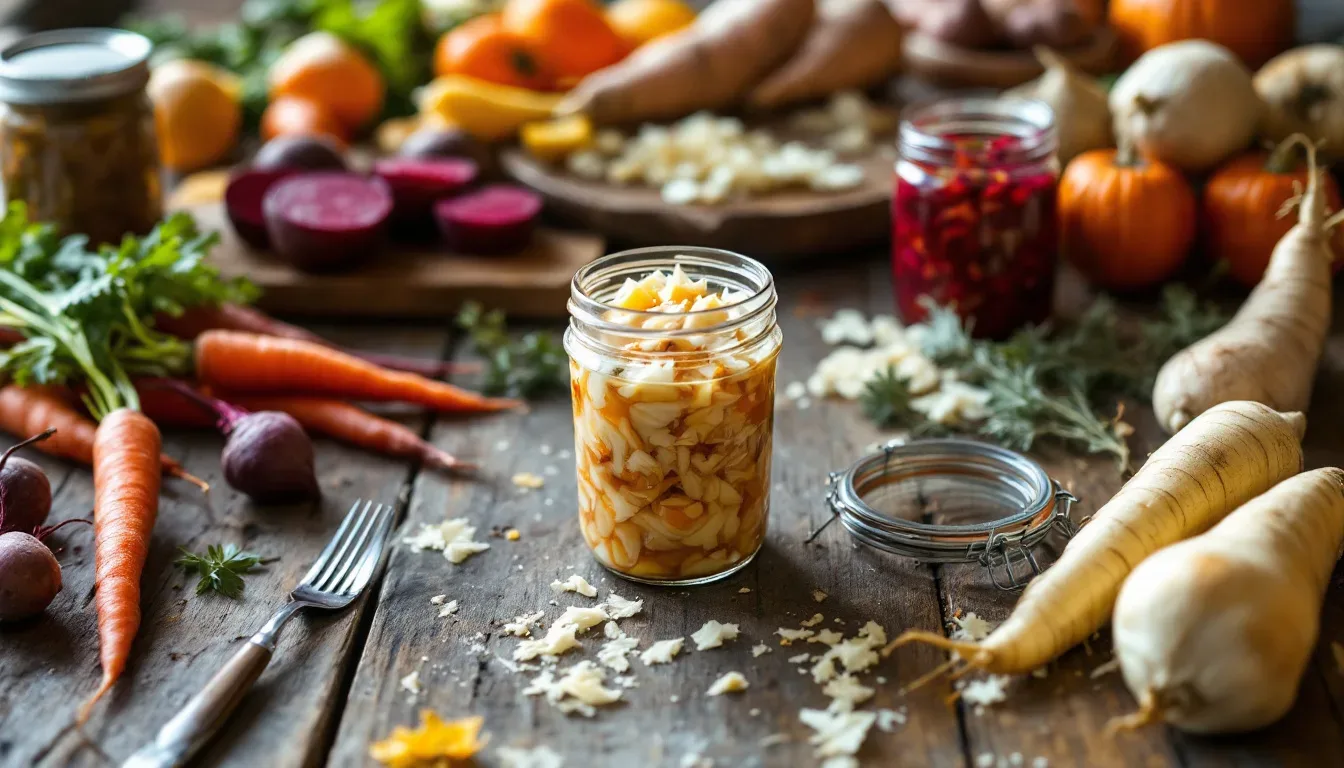
Traditional food cultures across the Northern Hemisphere independently developed fermented winter staples — sauerkraut, pickled beets, aged cheeses, sourdough bread — long before anyone understood microbiology. The seasonal logic was intuitive: preserve summer’s abundance to sustain winter’s gut.
Adding even small amounts of fermented foods to winter meals is one of the most practical ways to compensate for the natural reduction in dietary diversity without overhauling your entire approach to eating.
How to Build Fermented Foods Into Everyday Winter Meals
The biggest mistake people make is treating fermented foods as a separate health category that requires special preparation or dedicated effort. They work best as quiet additions to meals you are already cooking.
Simple ways to start without disruption
- Add a spoonful of sauerkraut or kimchi alongside roast chicken, sausages, or grain bowls — no cooking needed, and the contrast of sour and savoury genuinely improves the meal.
- Swap regular yoghurt for plain kefir in overnight oats, smoothies, or as a dressing base mixed with garlic and lemon.
- Use miso paste to deepen the flavour of winter soups and stews — a tablespoon stirred in at the end of cooking adds umami without overwhelming the dish.
- Make sourdough your default bread. It ferments slowly, is easier to digest than standard loaves, and pairs with everything from soup to smoked fish.
- Serve a small dish of pickled vegetables — quick-pickled red onions, cucumbers, or beets — as a table condiment the way many Eastern European families traditionally do.
- Incorporate aged, traditionally produced cheese (think real Parmigiano-Reggiano or aged Gouda) as a finishing element on pasta, polenta, or vegetable dishes.
A note on heat
Live bacterial cultures are sensitive to high temperatures, so adding miso or raw sauerkraut to a boiling pot will destroy the microorganisms. Add them at the end of cooking or serve them cold alongside hot dishes to preserve their activity. This is a small but important practical detail.
What to Expect — and What Not to Expect
Fermented foods are not medicine. They will not cure digestive complaints, reverse poor dietary habits, or replace a varied diet. What they can do, consistently incorporated over weeks and months, is provide a meaningful source of microbial input during a season when your food naturally provides less of it. Many people report improved digestive comfort and less bloating when they start eating small amounts regularly — but this is a gradual process, and starting slowly is wise if your gut is not used to it.
If you are new to fermented foods, begin with small portions — a tablespoon of sauerkraut, a small glass of kefir — and increase gradually. A sudden large intake can cause temporary bloating as your gut adjusts.
Getting the Family On Board
Fermented foods have strong flavours, and not everyone in the household will fall in love immediately. The practical approach is to introduce them as flavour elements rather than health supplements. Kimchi fried rice, miso-glazed salmon, sourdough with good butter, kefir-based ranch dip for vegetables — these are meals that taste good first and happen to support gut diversity second. Children especially respond better when fermented foods are embedded in familiar formats rather than presented as something unusual they are supposed to eat for their health.
Časté dotazy
Are store-bought fermented foods as effective as homemade ones?
It depends on the product. Many commercially produced fermented foods — particularly shelf-stable pickles made with vinegar rather than through natural lacto-fermentation — do not contain live cultures. For probiotic benefit, look for refrigerated products labelled “naturally fermented” or “contains live cultures.” Homemade versions using just salt and vegetables are often more active, but quality shop-bought options do exist and are perfectly suitable for everyday use.
How much should I eat daily to notice a difference?
There is no universal recommended dose. Most nutrition researchers working in this area suggest that consistency matters more than quantity. A small serving — two to three tablespoons of sauerkraut or kimchi, a cup of kefir, or a bowl of miso soup — eaten most days is likely more beneficial than a large amount once a week. Think of it as a regular background habit rather than a supplement to take.
Can fermented foods cause problems for people with sensitive digestion?
For some people, particularly those with irritable bowel syndrome or histamine sensitivity, certain fermented foods can trigger symptoms. Aged cheeses, kimchi, and wine-based vinegars are higher in histamine and may not suit everyone. If you have a known sensitivity or a diagnosed digestive condition, it is worth discussing dietary changes with a healthcare professional before significantly increasing your intake. For most healthy adults, starting small and increasing gradually avoids any adjustment discomfort.
Claire has spent over a decade helping families redesign their kitchens and meal rhythms around seasonal produce and metabolic science. She believes that eating with the calendar is one of the most underrated health tools available.