How to Sit at a Holiday Table With Awareness Instead of Anxiety (No Calorie Counting Required)
Festive meals are not the enemy of balanced eating — mindless disconnection from hunger cues during them is. This practical guide reframes the holiday table as an opportunity to practice portion awareness as a family ritual rather than a battleground of restriction.

Registered Dietitian & Seasonal Nutrition Specialist · 23. 7. 2026 · 5 min čtení
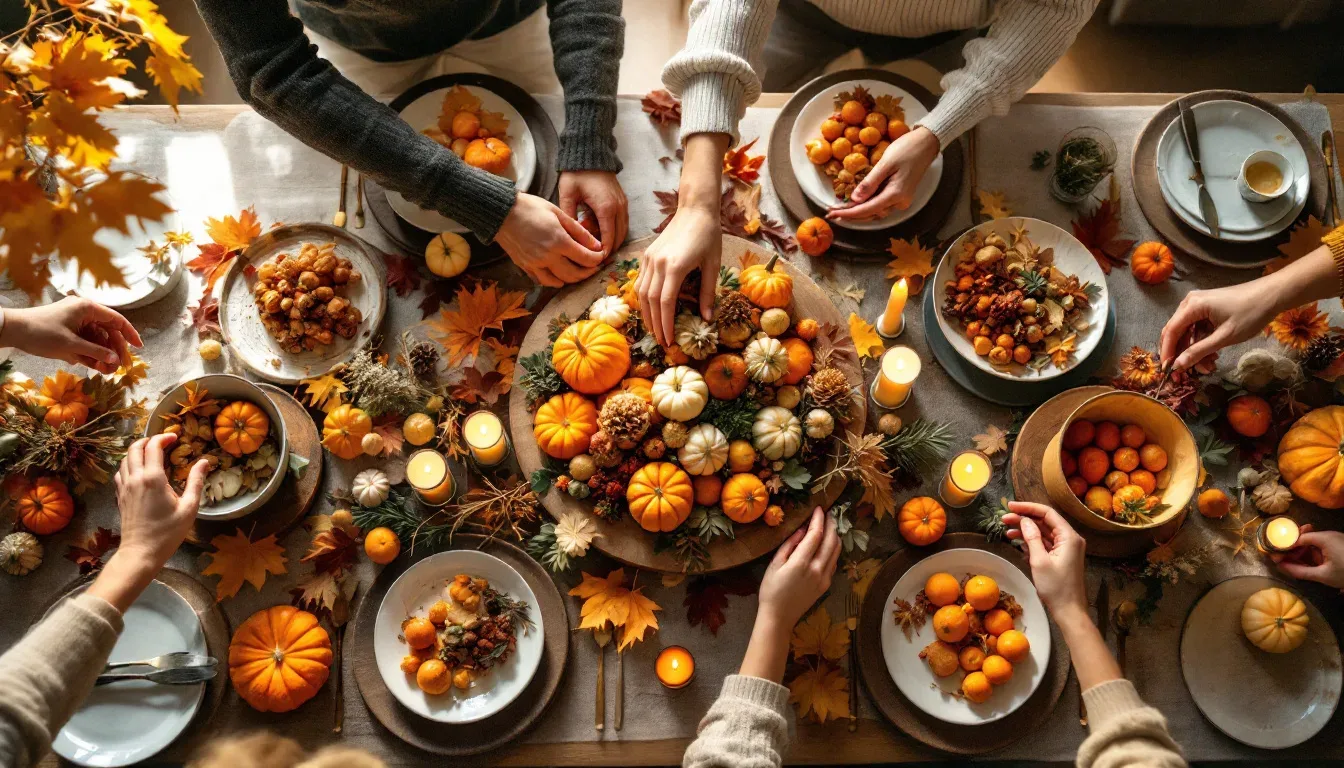
There is a particular kind of dread that arrives alongside the holiday season — not about the food itself, but about what eating it seems to mean. Will you overdo it? Will you regret it? Will the whole month of careful habits unravel over a single roast dinner? The good news is that festive meals are not the nutritional catastrophe they are often made out to be. The real challenge is not the food on the table — it is the disconnection from your own body that tends to happen when the atmosphere is loud, the plates are generous, and the social pressure to eat (or not eat) is quietly humming in the background.
Why Holiday Eating Feels Different
Ordinary weekday meals happen in a reasonably predictable rhythm. You sit down when you are hungry, eat roughly the same portions, and move on. Holiday meals break almost every one of those rhythms at once. They stretch over two or three hours, they come with appetisers and extras, alcohol often softens inhibitions around second helpings, and the emotional charge of family gatherings can make you eat faster, slower, or more anxiously depending on the dynamics at the table.
None of this is a character flaw. It is simply a changed environment — and changed environments require a slightly adjusted level of awareness, not a stricter set of rules. The moment you bring a rigid calorie budget to a festive table, you set yourself up for either misery or rebellion. Neither is particularly helpful for long-term balanced eating habits.
The Difference Between Awareness and Anxiety
Awareness means noticing what is happening — in your body, on your plate, at the table — without immediately judging it. Anxiety means scanning for threats, mentally tallying damage, and treating every bite as a decision with moral weight. They can look similar from the outside, but they feel completely different and produce very different outcomes over time.
Eating with awareness is not about eating less. It is about eating in a way that keeps you genuinely connected to the experience — so you can enjoy the meal, recognise when you are satisfied, and step away from the table feeling good rather than stuffed or deprived.
Practically speaking, awareness at the holiday table might look like this: you take a full plate, you eat slowly enough to actually taste things, you notice partway through whether you are still enjoying the food or eating out of momentum, and you give yourself permission to stop — or to have a small second helping — based on how you actually feel rather than on a mental rule you set two weeks ago.
Practical Strategies Before You Even Sit Down
How you arrive at the table matters as much as what you do there. A few simple habits in the hours before a big festive meal can make the difference between entering the table grounded or ravenous and reactive.
- Eat normally during the day. Skipping breakfast or lunch to “save room” tends to backfire. Arriving very hungry amplifies appetite signals and makes it much harder to pace yourself.
- Stay hydrated. Mild dehydration is easy to confuse with hunger and can lead to eating more than feels comfortable. Have water in the hours leading up to the meal.
- Take a short walk or do some light movement before the meal, not as penance, but as a way of arriving in your body rather than in your head. Even fifteen minutes outside helps reset the nervous system before a potentially charged family gathering.
- Set a gentle intention, not a rule. Something like “I want to taste everything I love and stop when I feel comfortable” is far more useful than “I will not eat dessert.”
At the Table: Slowing Down Without Making It Weird
You do not need to announce mindful eating practices to your family. You can simply be the person who puts their fork down between bites, who asks a question and actually listens to the answer, who refills their water glass. These small acts naturally slow the pace of eating and create space for your body’s satisfaction signals to reach your awareness — which typically takes around fifteen to twenty minutes from the start of a meal.
A few anchors that help
Checking in with your hunger level roughly halfway through your plate is one of the most practical things you can do. Not obsessively, just a quiet moment of: Am I still hungry? Am I eating because it tastes wonderful, or because it is there? Both can be valid reasons to continue — but knowing which it is keeps you in the driver’s seat.
It also helps to serve yourself smaller portions to begin with. Not as restriction, but as strategy: it is always possible to go back for more, and a less heaped plate gives you room to decide deliberately rather than eat past comfort simply because the food was already in front of you.
Making It a Family Ritual Rather Than a Private Battle
The holiday table is, at its best, a shared experience. One of the quieter gifts you can give your family — especially any children at the table — is a model of relaxed, attentive eating. This does not require a lecture about nutrition. It can be as simple as talking about the food with genuine curiosity: where did this recipe come from, what makes this dish different from last year’s version, who made what.
Conversations that bring attention to the sensory pleasure of food — its taste, texture, smell, the story behind it — naturally slow eating and make the meal more satisfying. Contrast this with table conversation dominated by comments about who is “being good” or who “deserves” the dessert, which quietly teaches everyone at the table that food is a moral transaction rather than a pleasurable, nourishing experience.
Involving children in simple choices — letting them serve their own portions, encouraging them to notice when they feel full — builds the kind of internal awareness that lasts far longer than any food rule imposed from outside.
After the Meal: The Reset That Actually Works
If you eat more than felt comfortable, the single most useful thing you can do is move on without drama. One meal — even a very generous one — does not redirect a healthy lifestyle. What does create problems over time is the spiral of guilt that follows overeating, which often leads to restriction, which leads to the next cycle of overeating. Breaking that cycle is less about what happens during the meal and more about the story you tell yourself afterwards.
A short walk after a large meal is genuinely helpful — not as calorie burning but because it supports digestion and gives you something positive to do with the physical discomfort of fullness. Returning to your normal eating pattern at the very next meal, without skipping or compensating, is the most stabilising thing you can do for your body’s rhythm.
Časté dotazy
Is it really possible to enjoy festive food without overeating?
Yes, and for most people it becomes more reliable with practice rather than willpower. The key is staying connected to your body’s signals rather than relying on external rules. Eating slowly, pausing mid-meal, and giving yourself genuine permission to enjoy food (rather than eating guiltily and quickly) tends to result in a more satisfying and better-calibrated meal than any strict strategy would.
What if other people at the table keep pushing food on me?
Social pressure around food is very real at family gatherings. A few responses that tend to work well without creating conflict: “It looks amazing — I might have a little more in a moment” buys time gracefully. Keeping your water glass full and staying engaged in conversation also naturally deflects repeated offers. You do not owe anyone an explanation about how much you eat.
How do I talk to my children about holiday eating without creating anxiety around food?
Focus on the positive and keep the language neutral. Phrases like “let’s taste everything” or “tell me what your favourite part of the meal was” invite curiosity rather than categorising food as good or bad. Avoid commenting on how much children eat or using dessert as a reward, as both habits can disrupt children’s natural ability to regulate their own appetite over time.
Claire has spent over a decade helping families redesign their kitchens and meal rhythms around seasonal produce and metabolic science. She believes that eating with the calendar is one of the most underrated health tools available.